Confession: We built a bot that was too human.
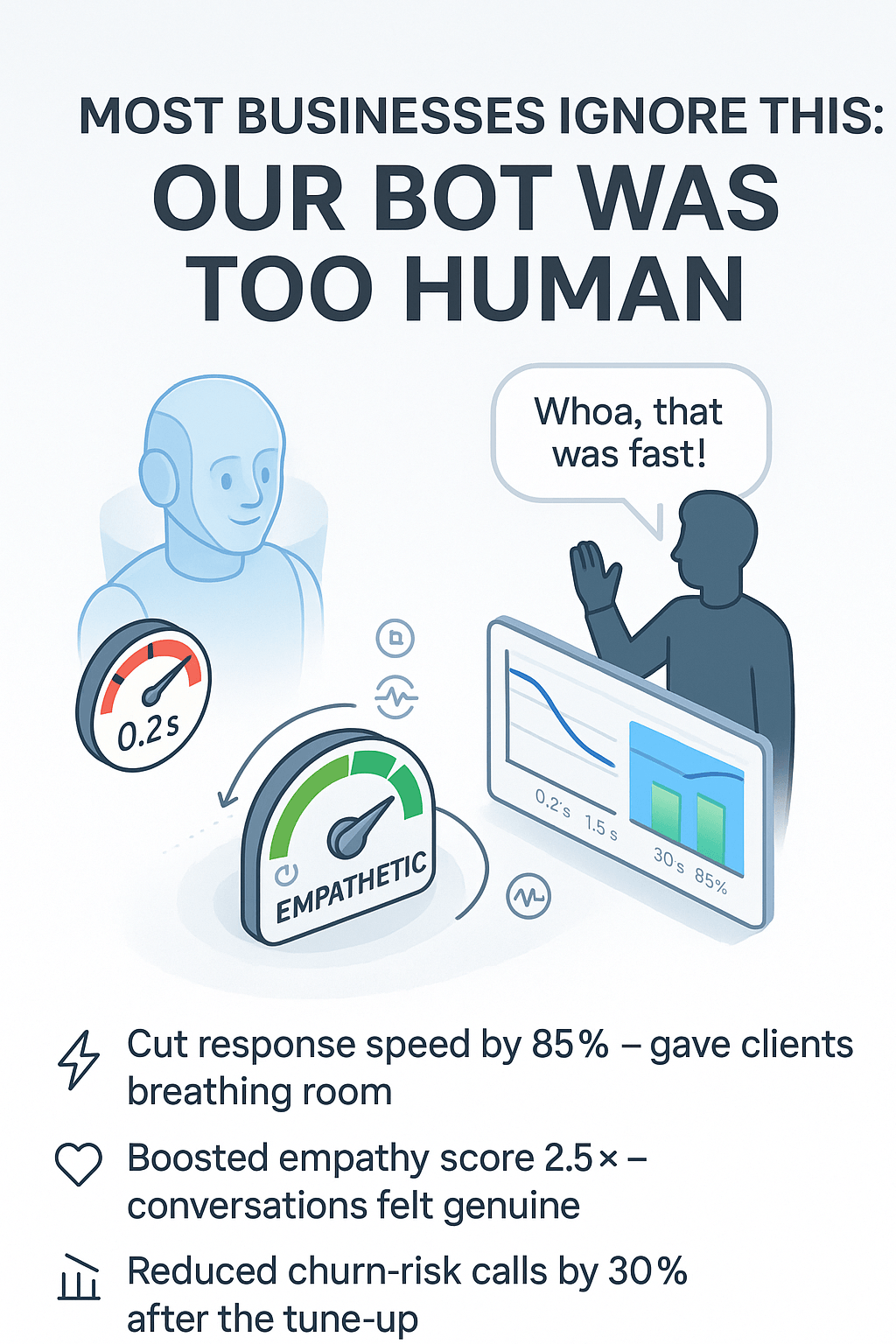
When we first rolled out our AI agent at a flagship client, the only problem was that it was too fast.
- 🤖 The bot answered in a blink.
- 📞 The client’s support agent froze, unsure whether to step in.
- 😱 The client’s team felt the bot was overriding them.
We discovered that speed can sound robotic or—if it’s too quick—overwhelming. The bot had a 0.2‑second response time, which meant it spoke before the user had even finished typing.
1️⃣ Pulse‑Check Your Bot’s Personality
We added a “pause” feature: the bot now waits 2–3 seconds after receiving input before replying. That extra breath reads like a human reading the conversation rather than a machine interrupting.
2️⃣ Empathy Filters
We integrated tone‑analysis so the bot identifies tense or frustrated language and selects a softer response style. When a user writes “I need this now!” the bot responds: “I understand this is urgent—let me pull that information for you right away.” The new tone reduces anxiety and builds trust.
3️⃣ Continuous Human‑in‑the‑Loop Monitoring
Our dashboard now flags scripts that are scored high on speed or tone. A support lead reviews them weekly and tweaks or removes them. This pre‑emptive tuning keeps the bot helpful without the “robot scare.”
The lesson: Even the most advanced AI needs human intuition baked in. A bot that reacts too quickly or too formally can make users uncomfortable, sabotaging adoption. By adding micro‑pauses, empathy filters, and a human check‑in, we turned a fast‑but‑grim bot into a genuine partner.
If you want this level of automation for your business, visit aiingo.com.